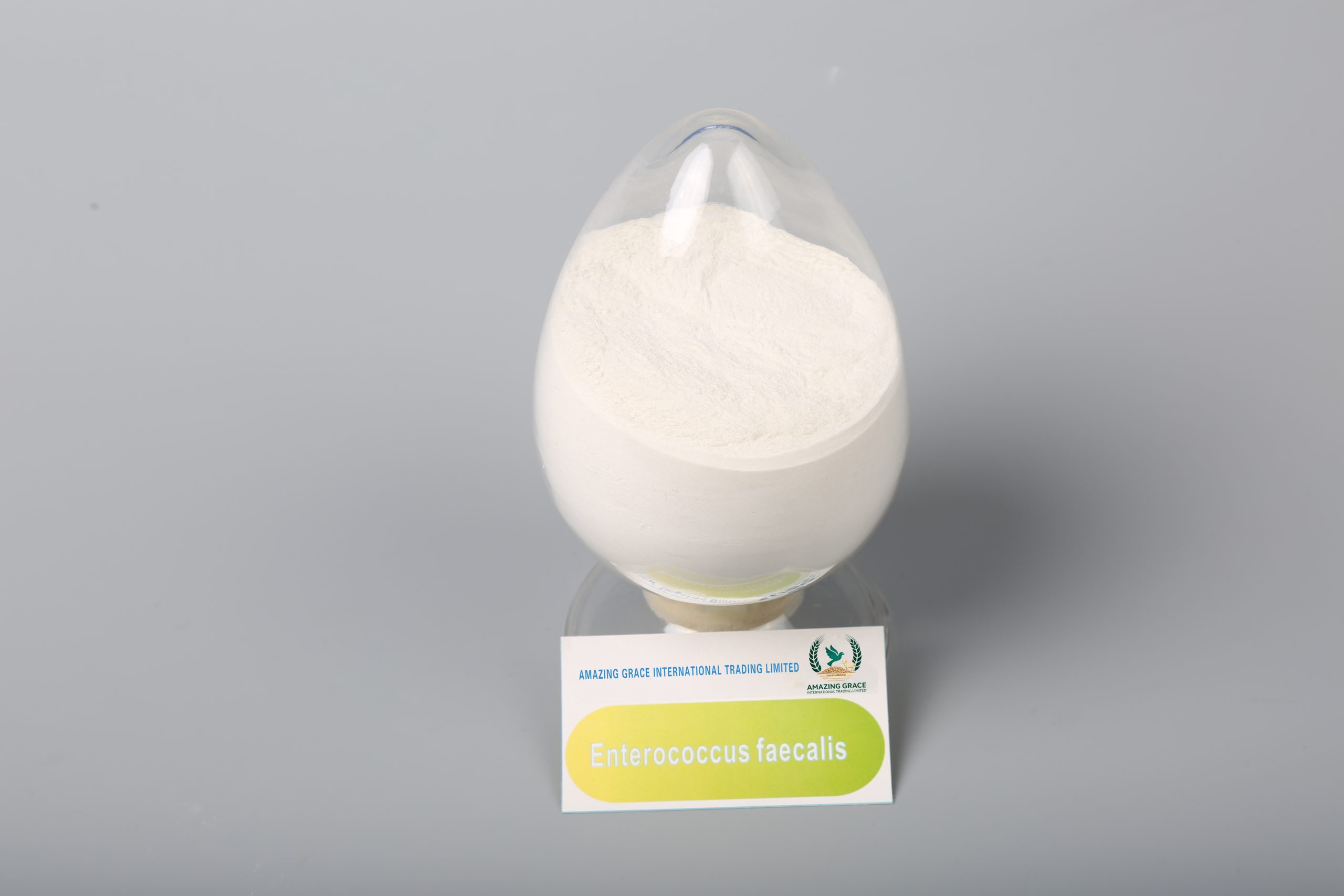
Enterococcus Faecalis is a facultative anaerobic bacteria that is isolated from the intestinal tract of animals and has good homology.
It can quickly adapt to the intestinal environment of animals and multiply quickly to become a dominant population.
Enterococcus faecalis can not only produce a variety of enzymes, B vitamins, lactic acid and growth promoting factors in animals, but also effectively inhibit the growth of pathogenic bacteria such as Salmonella and Escherichia coli, improve feed conversion rate and reduce feed production costs.
Product advantages
High safety: non-transgenic strains, pure natural and efficient lactic acid bacteria, high safety and good stability;
High heat resistance: can withstand the high pelleting temperature during feed processing;
Anti-acid and bile salt: can tolerate gastric acid environment (low pH 3-5) and bile salt concentration 1.0%;
High resistance: resistance to most antibiotics commonly used in feed additives;
Efficient colonization: strong intestinal mucosal adhesion, strong colonization ability, and rapid formation of intestinal protective film;
Benefits
Enterococcus Faecalis will produce a large number of digestive enzymes during growth and metabolism, optimize the digestive system of multiple enzymes in the intestine, and produce vitamin B, organic acids, growth promoting factors, etc.. Effectively improve the nutrient deficiency of roughage and promote Digestion and absorption.
Bacteria secreted by bacteriocins have a good inhibitory effect on pathogens (such as Salmonella, Shigella) and improve the microecological balance of the intestinal tract.
Improve the phagocytic ability and lymphocyte transformation rate of cultured animals, enhance cellular immunity; stimulate the secretion of reactive oxygen species, lysosomal enzymes and monocytes, and enhance immunity.
Improve the breeding environment, reduce the ammonia concentration by more than 70%, and reduce the occurrence of respiratory and eye diseases.
As a pond water quality and substrate improver, it can degrade organic waste in the aquaculture environment, reduce ammonia nitrogen, nitrite and other harmful substances, and optimize the water environment.